The drain field is where your septic system finishes the job. It's also the part that's most expensive to replace, and the part most often blamed for problems it didn't cause. So the first step is always figuring out whether the field is actually the problem.
How a drain field works, and why they fail
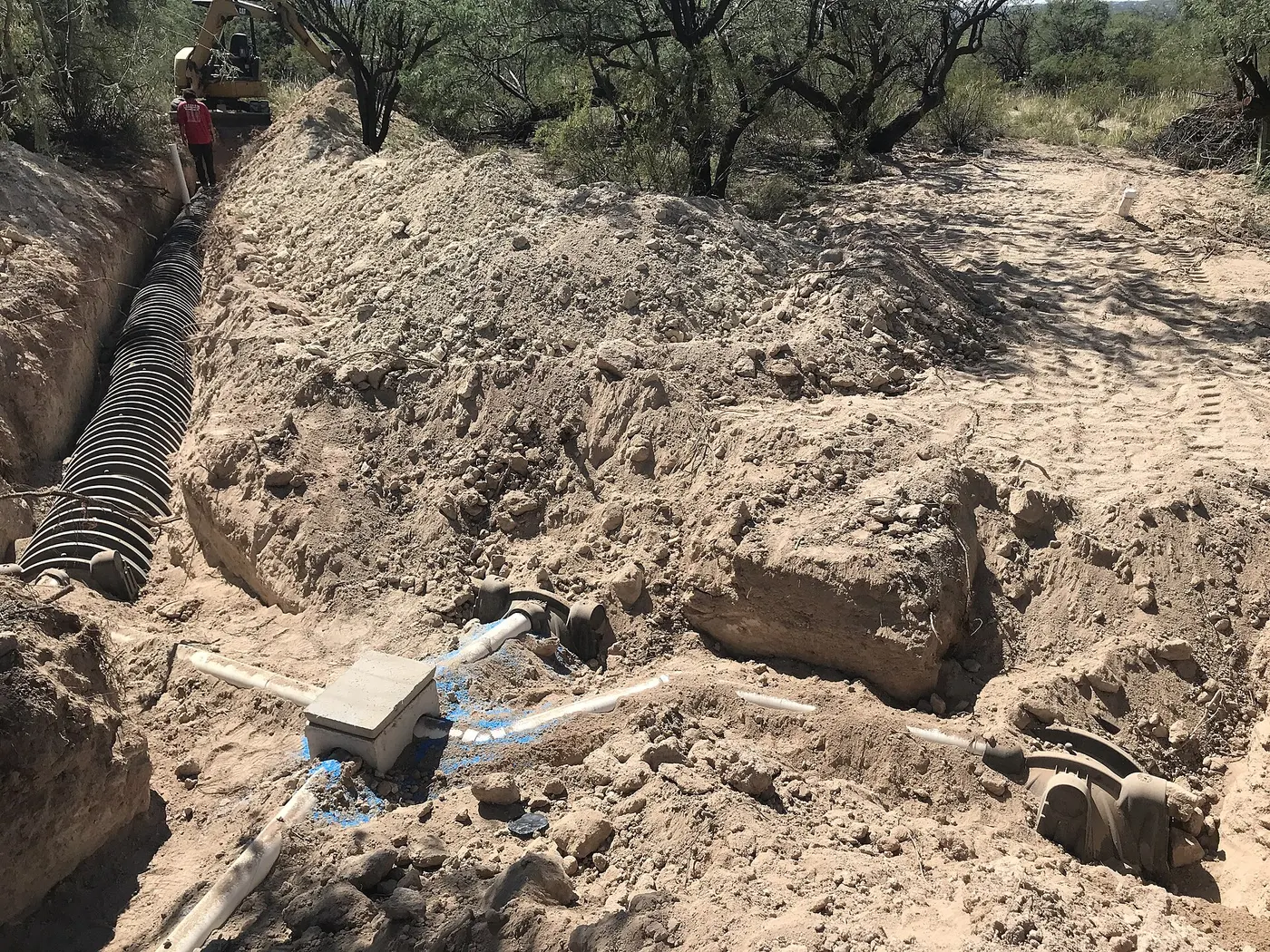
Liquid leaves the septic tank and flows into a set of buried trenches in your yard. From there it seeps into the soil, and the soil filters and treats it. Over time, a layer of organic material builds up where the water meets the soil. That's normal. Trouble starts when that layer gets too thick and the soil can't absorb water as fast as the house sends it.
Common causes:
- Solids from the tank. An overdue pumping or a missing outlet baffle lets sludge and scum reach the field and clog it.
- Too much water. Heavy laundry days, leaky toilets, or gutters and sump pumps draining onto the field overload it.
- Compaction. Cars, trucks or equipment driving over the field crush the soil and pipes.
- Roots. Trees and shrubs near the field send roots into the lines.
- Age. Fields do wear out eventually.
Drain field problems in Statesville's red clay
Much of the ground around Statesville is red clay, and red clay drains slowly. A field in clay has less extra capacity than one in sandier soil, so the causes above hit harder and sooner. After long stretches of rain, a clay-soil field can stay saturated, and a system that was barely keeping up will start showing symptoms. That doesn't always mean the field is dead, but it does mean it's working at its limit.
Signs of a failing drain field
- Soggy, spongy ground over the field, even in dry weather
- Grass over the field that's noticeably greener than the rest of the yard
- Sewage smell in the yard
- Slow drains and gurgling throughout the house
- Water flowing back into the tank from the field during pumping
- Backups that return shortly after a pumping
How a drain field problem gets diagnosed
- Rule out the tank. The technician checks sludge levels and baffles, and often pumps the tank. Sometimes that alone solves the symptoms.
- Check the pipes. A crushed or settled line between the tank and field can look like a failed field.
- Evaluate the field. Next comes a look for saturation, surfacing water and how the field responds.
- Explain the options. Repair, partial replacement or full replacement, with the reasoning for each.
Repair vs. replacement
Not every struggling field needs to be replaced. Depending on what the contractor finds, options can include:
- Fixing the tank problem that's been sending solids to the field
- Repairing broken or crushed lines
- Redirecting gutter or surface water away from the field
- Replacing a section of the field
- Full replacement, sometimes in a new location on the property
Field replacements and many field repairs require a permit from Iredell County Environmental Health, which evaluates the site and soil. The contractor should walk you through that process and handle the paperwork side.
What a good contractor won't do
A good contractor won't quote a new drain field until the cheaper causes are ruled out. And they won't promise that a temporary fix will last when the field is clearly done. You should get an honest read and the numbers in writing.
What drain field work costs
Drain field work is usually the biggest septic bill a homeowner faces, so it pays to know what drives it. Smaller repairs, like a damaged line, cost far less than a full replacement. Full replacements, poor soil, difficult access, or a site that needs an engineered design push it higher. Your actual price comes from a free on-site evaluation and a written quote. See our septic pumping cost guide for what moves the price.
If the evaluation shows the whole system needs replacing, see septic system installation. If it turns out to be a tank or baffle issue, that's septic repair. And the best prevention for any field is regular septic tank pumping.
Call (980) 223-3356 to set up an evaluation.
Questions people ask
Can a failing drain field be saved?
Sometimes. If the field is struggling because of solids from the tank, too much water, or a broken line, fixing that cause can bring it back to working order. If the soil itself is clogged throughout, replacement is usually the only lasting fix.
How long does a drain field last?
It depends on soil, design, maintenance and water use. Fields that get regular tank pumping and aren't overloaded with water last much longer than neglected ones. In slow-draining clay, maintenance matters even more.
Can I drive or park on my drain field?
No. Vehicles compact the soil and can crush the pipes. Keep cars, trucks, sheds, pools and patios off the field. Lawn grass is the best cover for it.
Will drain field replacement tear up my yard?
It does involve digging, so expect disturbed ground where the field goes. A careful crew keeps the work area as tight as the job allows and grades it back when they're done. Grass usually returns within a season.