A septic system has a few moving and breakable parts, and the rest is concrete, pipe and dirt. When something goes wrong, it's usually one of those small parts. The good news is that small parts are usually fixable without tearing up the yard.
Common septic repairs in Statesville
Baffles
Baffles are the fittings at the inlet and outlet of the tank. The inlet baffle directs incoming waste down into the tank. The outlet baffle keeps floating scum from flowing out to the drain field. Older concrete baffles can crumble, and missing outlet baffles are one of the most common reasons a drain field clogs early. Replacing a baffle is a straightforward repair once the tank is pumped.
Lids and risers
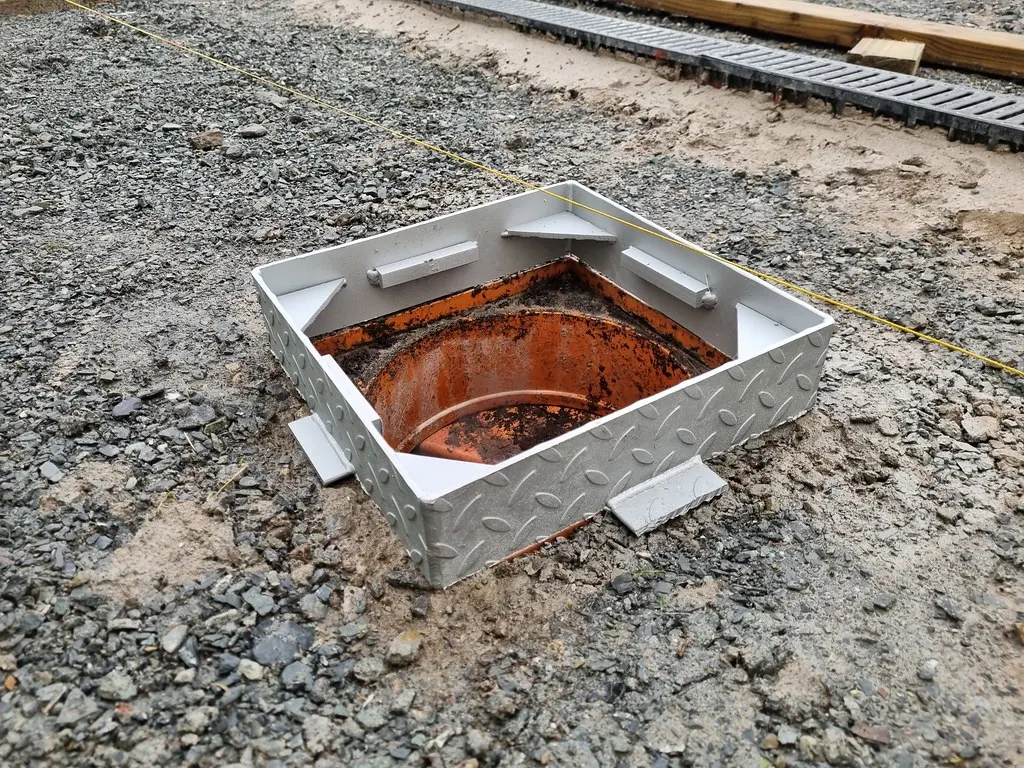
Cracked or broken lids are a safety problem, plain and simple. A person or pet can fall through. Damaged lids should be replaced, and the contractor can add risers that bring access up to ground level so future pumping doesn't involve a shovel.
Pipes
The pipe from the house to the tank, and from the tank to the field, can crack, separate or settle. Roots find their way into joints. A settled pipe holds water and solids instead of moving them along, which shows up as slow drains or backups. Repair usually means digging down to the bad section and replacing it.
Pumps and floats
Some systems, especially where the drain field sits uphill from the house, use a pump tank to move water to the field. Pumps wear out, and floats stick or fail. When that happens, water rises in the pump tank with nowhere to go.
Alarms and control panels
The alarm is your warning that water is too high in the pump tank. A dead alarm means you get no warning at all. A technician can test, repair or replace alarms and control panels.
Signs something needs repair
- An alarm sounding, or an alarm light on the control panel
- Slow drains or gurgling even though the tank was pumped recently
- Sewage smell near the tank
- A soft or sunken spot over the tank or pipes
- A lid that's cracked, loose or sitting below grade
- Water backing up into the house
If you're seeing an active backup or the alarm is going off, see our emergency septic service page or call (980) 223-3356 right away.
How a repair job goes
- Diagnosis. A good technician finds the cause before quoting the fix. That often means pumping the tank so they can see inside it.
- Written quote. You get the price for the repair in writing. If the work needs a permit from Iredell County Environmental Health, the contractor should tell you before anything starts.
- Repair. Most part-level repairs take a few hours to a day.
- Test and explain. The technician runs water through the system, tests pumps and alarms, and shows you what was replaced.
What a good septic contractor won't do
A good contractor won't replace a whole system when one part is the problem. If a new baffle and a pumping will solve it, that's what they should quote. They also won't patch something that's clearly at the end of its life just to keep the bill small today. If a repair won't last, an honest pro says so and explains the options.
Questions to ask any septic contractor about a repair
- What exactly failed, and can you show me?
- Is this a repair that solves the problem, or one that buys time?
- Does this need a county permit?
- Will the yard be disturbed, and how much?
- Is the price in writing?
What septic repairs cost
Minor repairs, like baffles, lids and short pipe sections, are usually among the smaller septic bills. Pump and alarm replacement costs more, depending on the pump, the control panel and how hard the tank is to reach. Your actual price comes from a free on-site visit and a written quote.
For more on what sets the price, see our septic pumping cost guide. If the problem turns out to be the field itself, read about drain field repair. And if you haven't pumped in a while, start with septic tank pumping, since an overdue tank is behind a lot of "repairs."
Questions people ask
Can a broken baffle cause drain field problems?
Yes. The outlet baffle keeps scum and floating solids in the tank. Without it, those solids flow out to the drain field and clog the soil. Replacing a baffle is far cheaper than repairing a field, which is why a good technician checks baffles on every pumping.
How long does a septic pump last?
It varies with the pump, how hard it works and how the system is used. Many last for years, but they do wear out. A working alarm is what tells you when a pump has failed, so keep the alarm in good shape too.
My alarm went off and then stopped. Is that okay?
Not necessarily. An alarm that comes and goes can mean the pump is struggling to keep up, a float is sticking, or heavy water use briefly overwhelmed the tank. It's worth having it checked before it turns into an overflow.
Do septic repairs need a permit in Iredell County?
Some do. Larger repairs, especially anything involving the drain field, usually require a permit from Iredell County Environmental Health. Part-level fixes like lids, baffles and alarms often don't. The contractor should tell you which category your repair falls into before work starts.