Grease is the one thing every commercial kitchen makes plenty of and no sewer or septic system wants. A grease trap catches it before it leaves the building. Pumping the trap on schedule is what keeps it working. Skip it long enough and the trap stops catching anything, and the grease goes on down the line to cause trouble somewhere more expensive.
How a grease trap works
Wastewater from sinks, dish machines and floor drains flows into the trap and slows down. As it cools, fats, oils and grease float to the top. Food solids sink to the bottom. Baffles inside hold both layers back while the clearer water in the middle flows out to the sewer or septic system.
That works until the layers get thick. Once the grease mat and the bottom sludge take up too much of the trap, water rushes through without time to separate, and grease leaves with it. A widely used rule of thumb is to pump before grease and solids together fill about a quarter of the trap's depth. Your local rules may set a different standard.
Under-sink traps vs. in-ground interceptors
They do the same job at very different sizes.
Small grease traps sit indoors, often under or beside a three-compartment sink or near the dish area. They hold a modest volume and fill fast in a busy kitchen, so they need frequent attention.
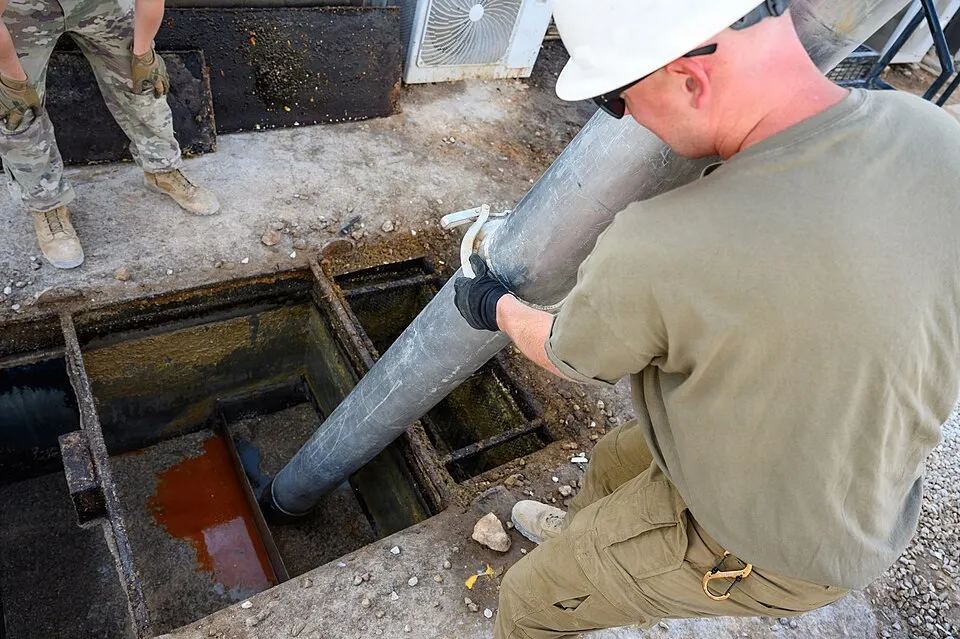
Grease interceptors are large tanks, usually buried outside the building with lids at the surface. They're common at full-service restaurants, cafeterias and other high-volume kitchens. They're pumped by a vacuum truck, the same kind of equipment used for septic tanks.
Which type a building needs is set by plumbing code and by the local sewer utility or inspector when the kitchen is built or changes use. If you're not sure what you have, the technician can tell you on the first visit.
How often to pump
There's no single answer. It depends on trap size, menu and volume:
- A fryer-heavy menu or a lot of meat on the grill fills a trap much faster than a coffee shop does.
- A small trap behind a busy line may need service every few weeks.
- A large interceptor at a moderate-volume restaurant may run a few months between pumpings.
The best way to set a schedule is to measure. On the first few visits, the technician checks how thick the grease and solids layers are, then sets the interval so the trap gets pumped before it reaches the limit. Busy seasons, menu changes and new equipment are all reasons to recheck.
Signs the trap is overdue
- Slow drains at the dish sink or floor drains
- A sewer or rancid grease smell in the kitchen or near the outdoor lids
- Water coming up through floor drains during the dish rush
- Grease visible in the downstream cleanout
- An inspector noting buildup during a visit
Any of these during service hours is a reason to call that day, not at the end of the month.
Why it matters
Kitchens on city sewer
In town, grease that gets past the trap cools and sticks inside the building drain and the public sewer. It's one of the most common causes of sewer blockages, which is why local utilities and inspectors set grease rules for food businesses and can check traps and records. We won't guess at the exact requirements for your address. Ask the sewer utility or your inspector, and keep your service records where a manager can find them.
Kitchens on septic
Out in the county, plenty of food businesses near Statesville run on septic: country stores with a grill, event venues, church fellowship halls. Grease is even harder on these systems. It thickens the scum layer in the septic tank, and grease that reaches the drain field coats the soil. In Iredell County's slow-draining red clay, a coated field can fail. If your building is on septic, the grease trap and the septic tank both need regular pumping, and the two schedules should be set together. See septic tank pumping and drain field repair for the septic side.
What a pumping visit should include
- Opening the trap or interceptor and measuring the grease and solids layers.
- Pumping out the full contents, not just skimming the top.
- Scraping down walls and baffles where grease has caked on.
- Checking inlet and outlet baffles, tees and lids for damage.
- Hauling the waste to a facility that accepts it.
- A service record for your files with the date, volume and condition.
A broken baffle or cracked lid is a repair, much like septic repair on a home system, and should be quoted separately.
What drives the price
Trap or interceptor size, how full it is, how far the truck has to park from the lids, how often it's serviced and whether the work happens after hours. A regular schedule usually costs less per visit than an emergency call to an overflowing trap. Our cost guide explains how pumping work is priced in general, and you get a written quote before service starts.
Food businesses in Statesville and nearby Troutman, Mooresville and Stony Point can call (980) 635-0562 to get on a schedule.
Questions people ask
Can my staff clean the grease trap themselves?
Small under-sink traps are sometimes cleaned by trained staff, depending on local rules. Large in-ground interceptors need a pump truck. Either way, the waste has to be disposed of properly, not poured into another drain.
Do enzyme or bacteria products replace pumping?
No. Some products break grease into smaller pieces that pass through the trap and harden again further down the line. They don't remove the grease and solids sitting in the trap. Pumping is what empties it.
Can the trap be pumped after we close?
Many grease trap services schedule early morning or after-hours visits so the kitchen isn't disrupted. Ask about it when you call, especially if you want a standing schedule.
How do I know what size trap we have?
Building plans or past service records often list it. If not, the technician can measure it on the first visit and note the size on your service record for next time.
Who sets the pumping rules for my restaurant?
Your local sewer utility, health department or plumbing inspector, depending on where you are. Rules can differ between in-town and county locations, so ask them directly and keep your pumping records ready to show.