Most people never think about their septic lid until a mower wheel drops into a soft spot or a pumping bill lists an hour of digging. Then the lid becomes the most interesting thing in the yard. It deserves the attention. The lid is the only thing standing between an open septic tank and anyone walking across your lawn.
Start with safety
A septic tank holds liquid deep enough to drown in and gases that can overcome a person quickly. A lid that's cracked, loose or sitting on a crumbling opening can give way under a child, a pet or an adult. Older concrete lids weaken with age. Some homes still have makeshift covers: a sheet of plywood, a slab that never fit right, a plastic lid that was never fastened down.
Treat any of these as urgent:
- A lid with a visible crack or a broken corner
- A lid that rocks or shifts when stepped on
- A sunken or soft spot right over the tank
- An opening covered with wood, metal sheeting or loose material
- A plastic lid with missing screws or no locking hardware
Keep kids and pets away from the spot, don't stand on it, and call (980) 635-0562. A damaged lid is usually a quick replacement. Don't lift it or look inside yourself. The gases are the real danger, and you can't always smell them.
Why so many Statesville tanks need digging
Plenty of tanks around Statesville and the rest of Iredell County were set with the lids a foot or more underground. For a long time that was simply how it was done. The grass grew over, the lids were forgotten, and every pumping since has started with someone probing the yard and digging through red clay. Wet clay is heavy and sticky. Dry clay is close to brick.
Each time, you pay for that labor. And because digging makes pumping a bigger chore, some owners put it off. That's how a tank that should be pumped every 3 to 5 years goes ten, and how solids end up in the drain field.
What risers do
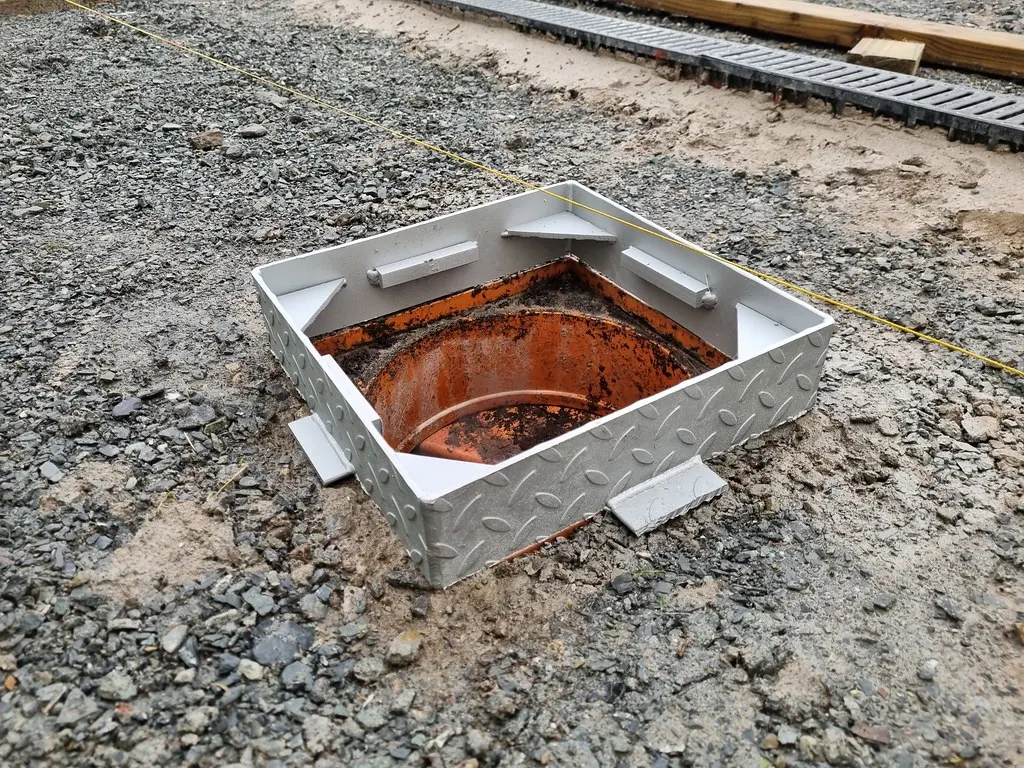
A riser is a short round or square collar that attaches to the tank opening and extends up to the surface. A lid sits on top at or just above grade. Next time, the technician walks over, unfastens the lid and starts work.
Typical setups:
- Inlet and outlet risers on a standard tank, so both ends can be checked and pumped.
- A riser over the pump tank on systems with a pump, so the pump, floats and alarm switch can be reached for service.
- A riser over an effluent filter if your tank has one, since filters need cleaning from time to time.
Plastic or concrete
Plastic risers are light, easy to cut to height and seal well against the tank. Concrete risers are heavy and durable but harder to handle and seal. Either works when it's installed properly. The contractor will usually recommend what fits your tank openings.
Lids that stay put
Modern riser lids fasten down with screws or a locking mechanism so they can't be lifted by hand. Some setups add a safety screen or secondary cover under the lid. Ask what your install includes.
How the job usually goes
- Locate and uncover. The technician finds the tank and digs down to the openings.
- Pump while it's open. Riser installs are often paired with septic tank pumping, since the tank is uncovered anyway.
- Check the tank top. If an opening is crumbling or a baffle is missing, it should be pointed out and fixed before the riser goes on. Baffle work falls under septic repair.
- Set and seal. The riser is attached and sealed so rainwater and soil stay out of the tank. On clay soil, keeping surface water out matters.
- Lid and backfill. The lid is fastened down, soil is graded around it, and the area is cleaned up.
Most jobs are finished in a few hours.
What drives the price
The number of openings, how deep the tank sits, riser material, whether pumping happens on the same visit, and whether the tank top needs any repair first. Adding risers during a scheduled pumping saves a separate dig. The septic pumping cost guide explains how those factors stack up.
Living with lids at grade
- Mowing over a flush lid is fine. Parking or driving on it is not.
- Don't bury the lids under mulch, pavers or landscape fabric. The point is to find them.
- Glance at the screws now and then when you mow.
- Write down where the lids are and keep it with the house records. If you sell, a buyer's septic inspection goes faster too.
Riser and lid work is available in Statesville and nearby Troutman, Olin and Cool Spring.
Questions people ask
My lid is cracked but seems solid. Is it really a problem?
Yes. Cracked concrete can fail without warning, especially when it's wet or under weight. A lid is inexpensive to replace compared with the risk of someone falling into a tank. Keep people off it until it's fixed.
How many risers does my tank need?
Most tanks get one over each opening that needs regular access, usually two. Systems with a pump tank or an effluent filter often need another. The technician can tell you once the tank is uncovered.
Will a riser let rainwater into my tank?
Not if it's sealed properly to the tank and the lid fits. A good install keeps surface water out, which matters on slow-draining clay where extra water already stresses the field.
Can a riser go on an old concrete tank?
Usually. If the tank top or opening is damaged, it may need repair first. The installer should check it and show you before the riser is set.
Do I need a permit to add risers or replace a lid?
Lid and riser work is generally treated as a small fix, and small fixes like a lid usually don't need a permit. If the technician finds something bigger that does, they should tell you before any work starts.